 Languages
Languages
Languages
KDU-0183
Solid Wood
30X30X7 cm
1.5kg
+3
Education
White Box
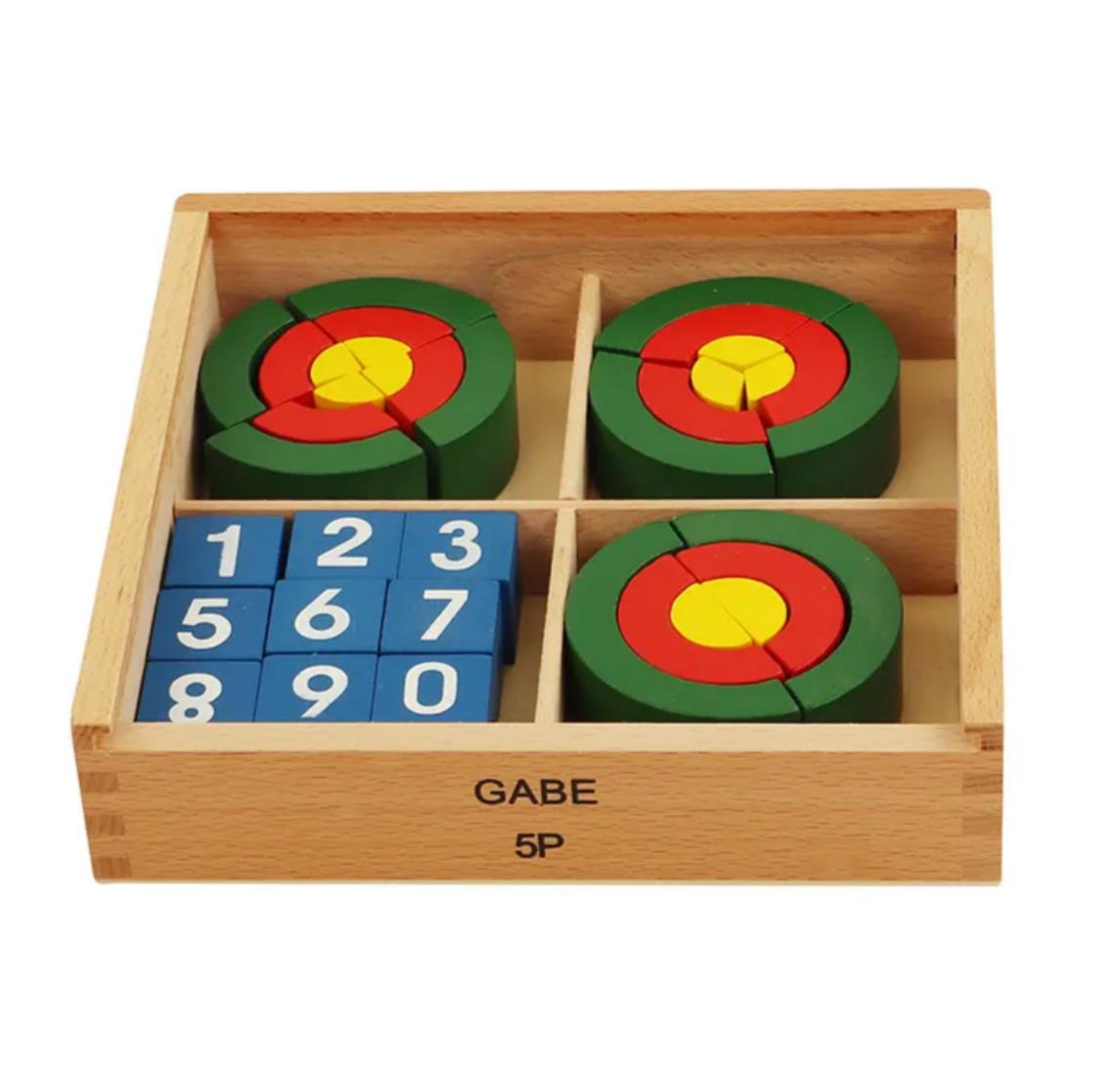
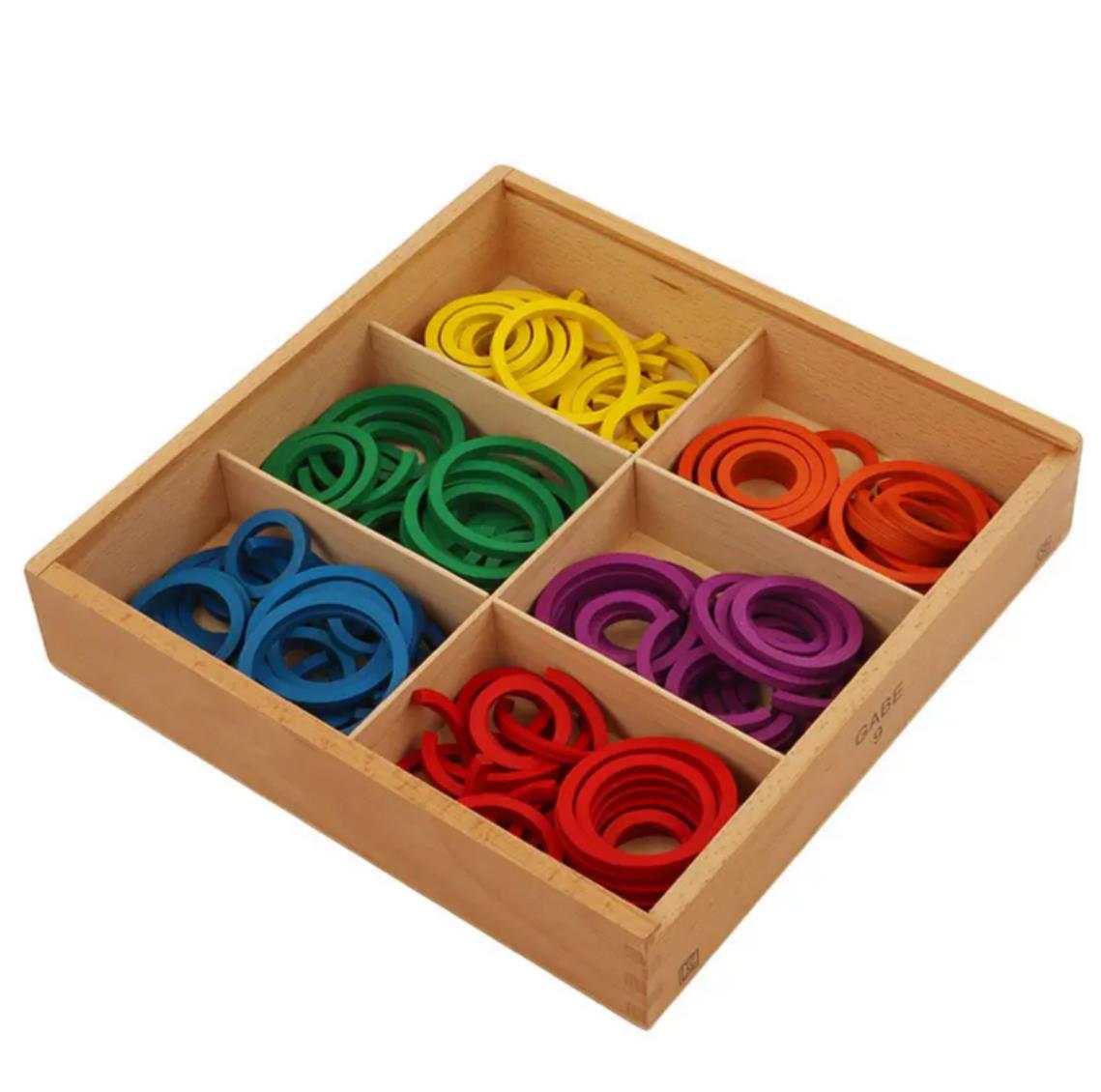
Froebel's Gift 9: The Ring – Mastering the Concept of the Curve
Product Overview
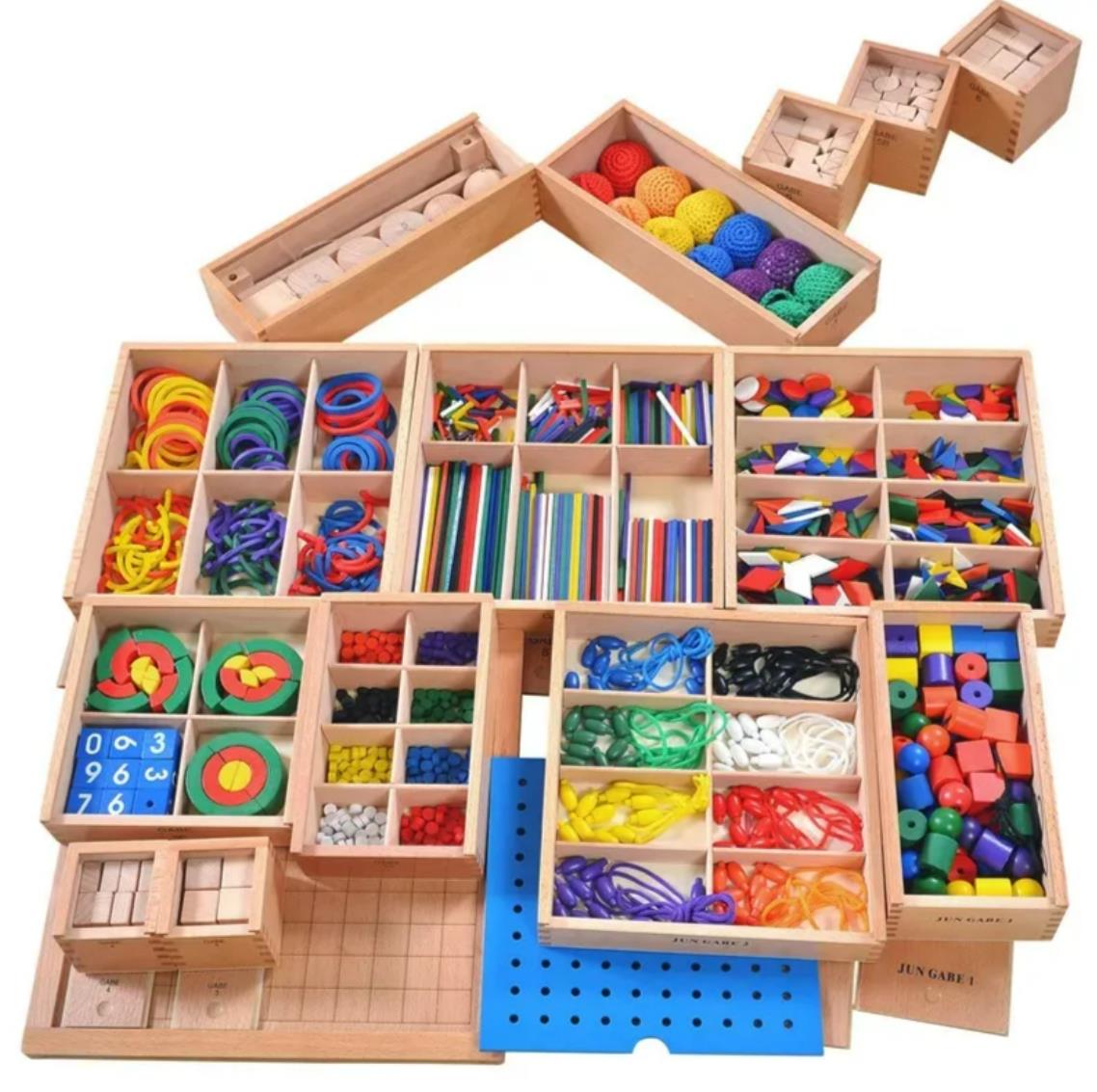
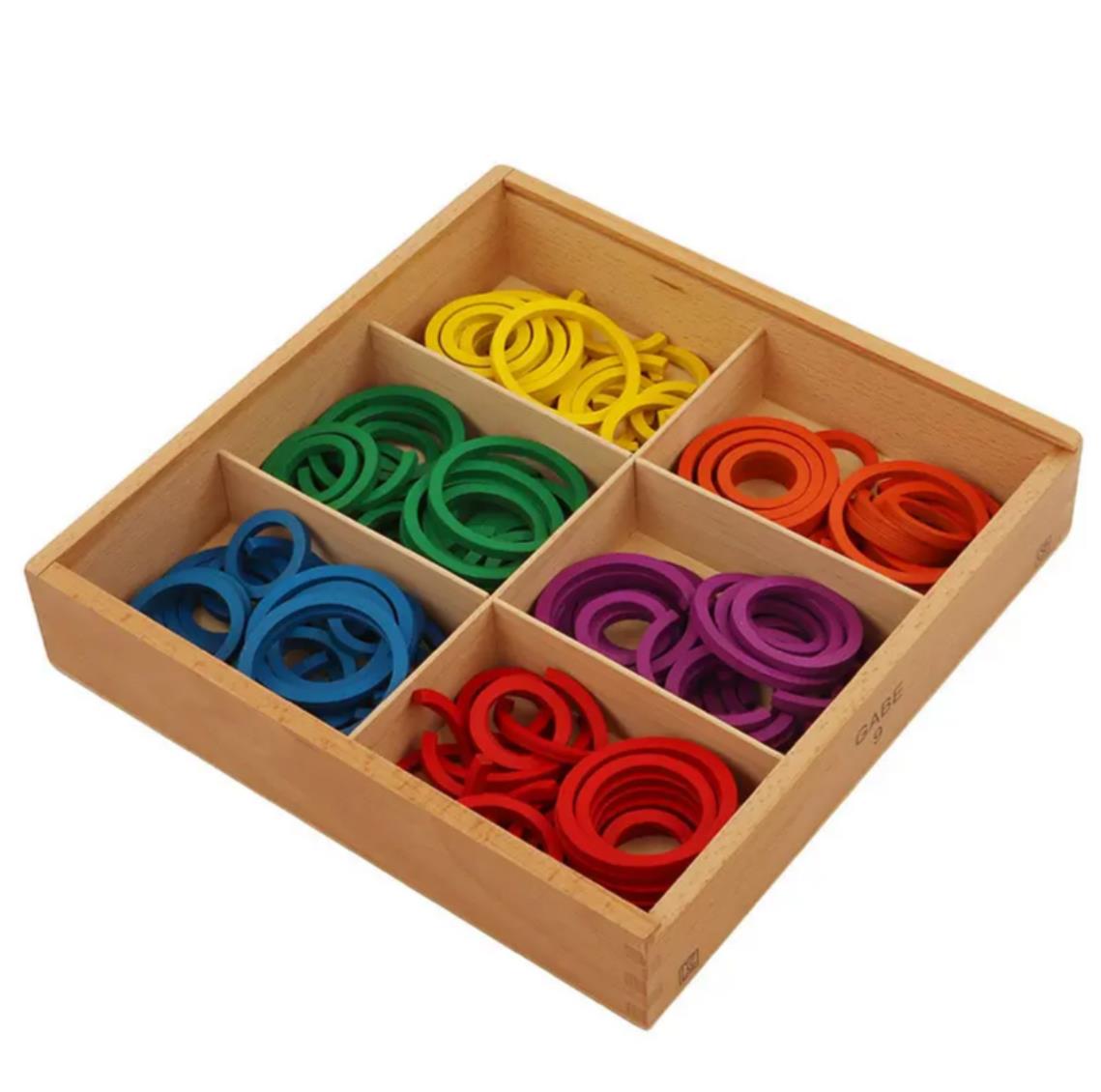
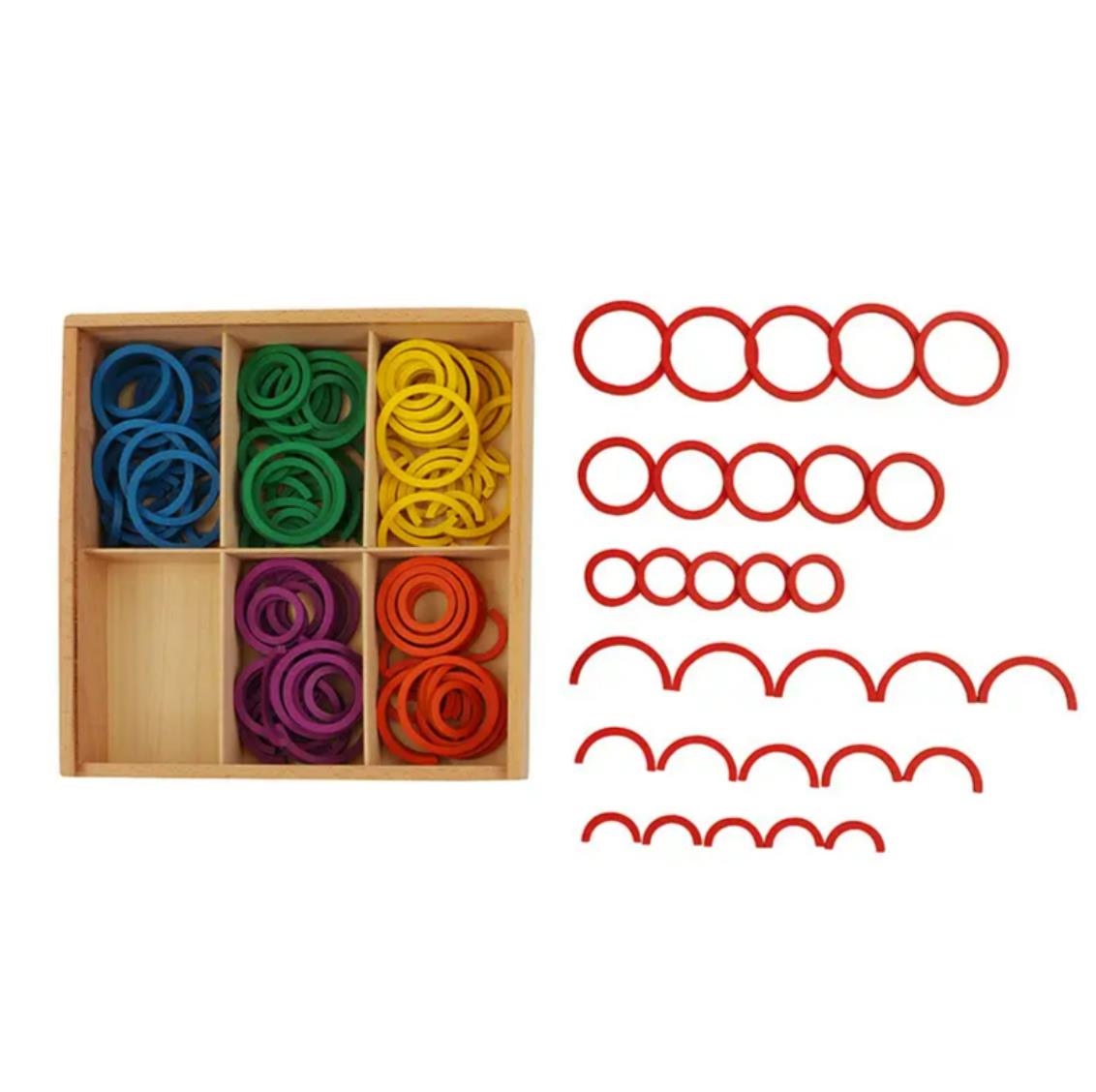
Froebel's Gift 9: The Ring represents a pivotal stage in the renowned Froebelian "Gifts" sequence, designed to transition children's understanding from the straight line to the curve. This set is not merely a collection of shapes but a precise educational tool that introduces the fundamental geometric concept of the curved line through direct, hands-on manipulation. By providing rings and segments in graduated sizes and colors, it allows children to explore how curves compose form, bridge the properties of lines and circles, and serve as a versatile medium for creative expression and problem-solving.
Material Composition & Progressive Design
This set is carefully composed to facilitate comparative learning and creative construction:
Complete Rings: Full circles that serve as the fundamental representation of a closed curve.
Ring Segments: Including semicircles and quarter-circles, which allow children to deconstruct and rebuild the whole, understanding its composite parts.
Graduated Sizes & Colors: The pieces are provided in multiple sizes and distinct colors, enabling activities in sorting, sequencing by size, and pattern recognition.
Educational Philosophy & Core Objectives
True to Froebel's vision, this Gift is designed for discovery, not instruction. Its primary aims are to:
Introduce the Curve as a Geometric Element: Following mastery of straight lines (Gift 8), children now explore the properties of curved lines—their continuity, lack of angles, and inherent motion.
Demonstrate the Relationship between Line and Circle: Children physically discover that a circle can be understood as a line that returns to its starting point, and conversely, that arcs are segments of a circle. This work bridges the concepts of Gift 8 (The Line) and lays the groundwork for Gift 10.
Foster Analytical Thinking: By comparing straight and curved elements, children develop the ability to analyze form, perceive relationships, and understand how basic elements combine to create complex wholes.
The Learning Process: From Creative Play to Conceptual Understanding
The material is used in a progression aligned with Froebel's three forms of expression:
Forms of Life (Creative Representation): Children use the rings and arcs to construct representations of objects from their world—a wheel, a rainbow, a smiling face, or the sun. This imaginative play connects abstract forms to concrete reality.
Forms of Knowledge (Mathematical & Geometric Discovery): The pieces become tools for exploring mathematical relationships. Children can compare sizes, create symmetrical patterns, experiment with fractions (a half-circle, a quarter-circle), and explore how curves define boundaries and enclosures.
Forms of Beauty (Aesthetic Design): The flowing nature of the curves lends itself to creating harmonious, rhythmic patterns and mandala-like designs. This cultivates an appreciation for symmetry, balance, and aesthetic composition.
Developmental Benefits & Skill Building
Refines Fine Motor Skills & Hand-Eye Coordination: Precise placement and alignment of the curved pieces require dexterity and control, directly preparing the hand for the fluid motions of writing.
Enhances Visual-Spatial Reasoning: Building with curves develops a sophisticated understanding of two-dimensional space, symmetry, and composition.
Cultivates Problem-Solving & Perseverance: Figuring out how to represent an idea or complete a symmetrical design with curved elements encourages logical thinking and focused effort.
Stimulates Creativity & Symbolic Thinking: The open-ended nature of the material supports limitless creative output and helps children learn to use symbols (like a circle for a face) to represent ideas.
Historical Significance & Lasting Influence
Froebel's Gift 9 is a testament to his revolutionary belief that abstract concepts are best grasped through tangible play. This foundational approach—using sequenced, self-correcting materials to guide discovery—profoundly influenced later educational pioneers, most notably Dr. Maria Montessori. The principles of hands-on exploration, sensorial learning, and child-led discovery embedded in this Gift can be seen as a direct precursor to the Montessori method, highlighting its enduring legacy in early childhood education.
Ideal For
This classic material is perfect for Froebel-inspired kindergartens, Montessori early childhood environments (as a supplement to sensorial and geometry studies), homeschoolers, and progressive preschools. It is particularly engaging for children ages 4 and older who are ready to move beyond basic shapes to explore the dynamic properties of lines and curves, providing a beautiful and intelligent bridge between play, art, and geometry.


 mike@kidbu.com
 0086-57981589552
 No.97 Road of Fuxing, Bailong Street, Yunhe, Lishui City, Zhejiang, China.
Copyright © 2009-2025 MOLTT All Right Reserved. Designed & SEO by followala.cn Sitemap | XML
Sennl.com Montessori Tents: Sport Tent | Role Playing Tent | Triangle Tent | House Tent | Paintable Tent | Baby Pet Interaction Tent